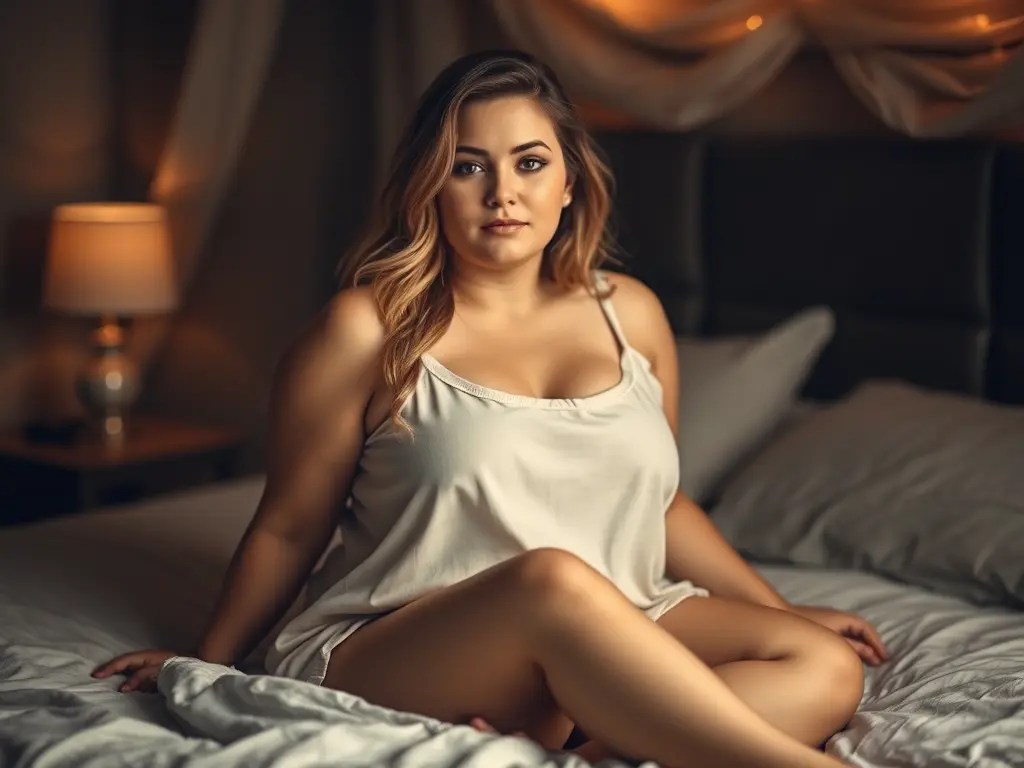
The rise of artificial intelligence in creative industries has opened doors to new ways of perceiving beauty—but also to new discussions.
Whether we want it or not, AI-generated content influences everything, from fashion campaigns to social media trends.
We’re not going to lie—we use AI too, just like almost everyone else online. Sometimes we use it to create images, other times to refine or enhance our copywriting. However, we always curate our content, which is why we thought this would be a great opportunity to show you what AI created when we asked for images of “midsize” women.
Let’s dive right into this.
How does AI interpret midsize bodies?
We prompted the AI with some simple requests. Here’s what we wrote, and the results it gave us:
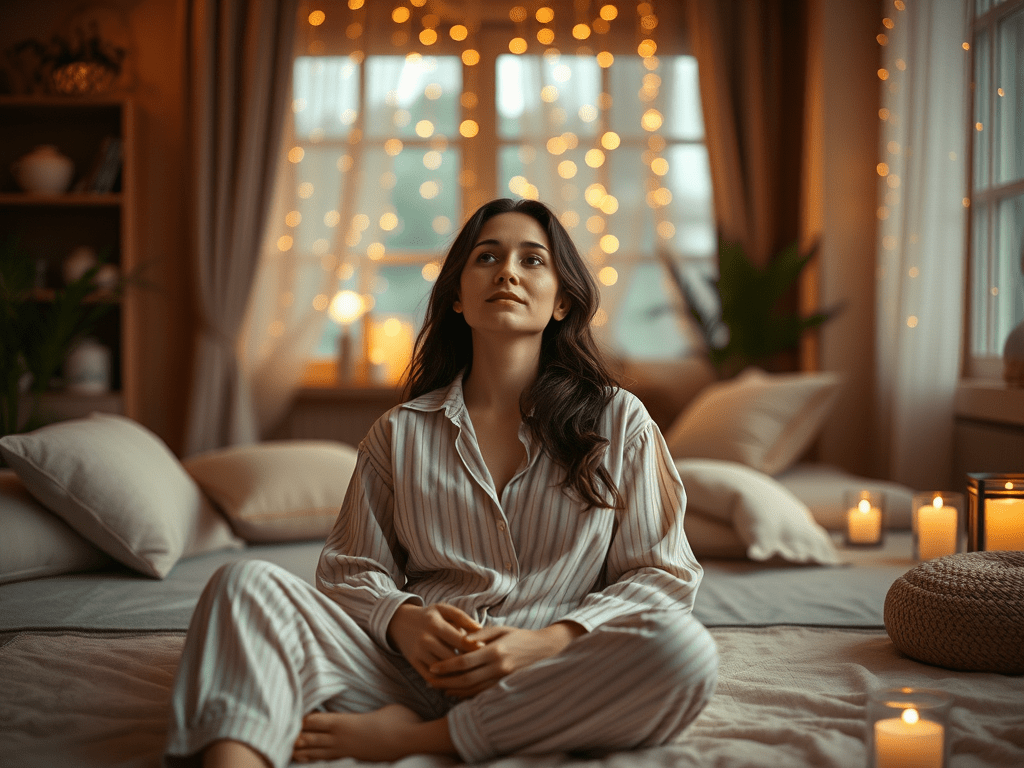
Prompt: “Generate an image of a midsize woman in soft lighting, sitting on a bed with a gentle, reflective expression. The atmosphere is warm and sensual, with dim lighting creating a sense of comfort and confidence.”
Result:
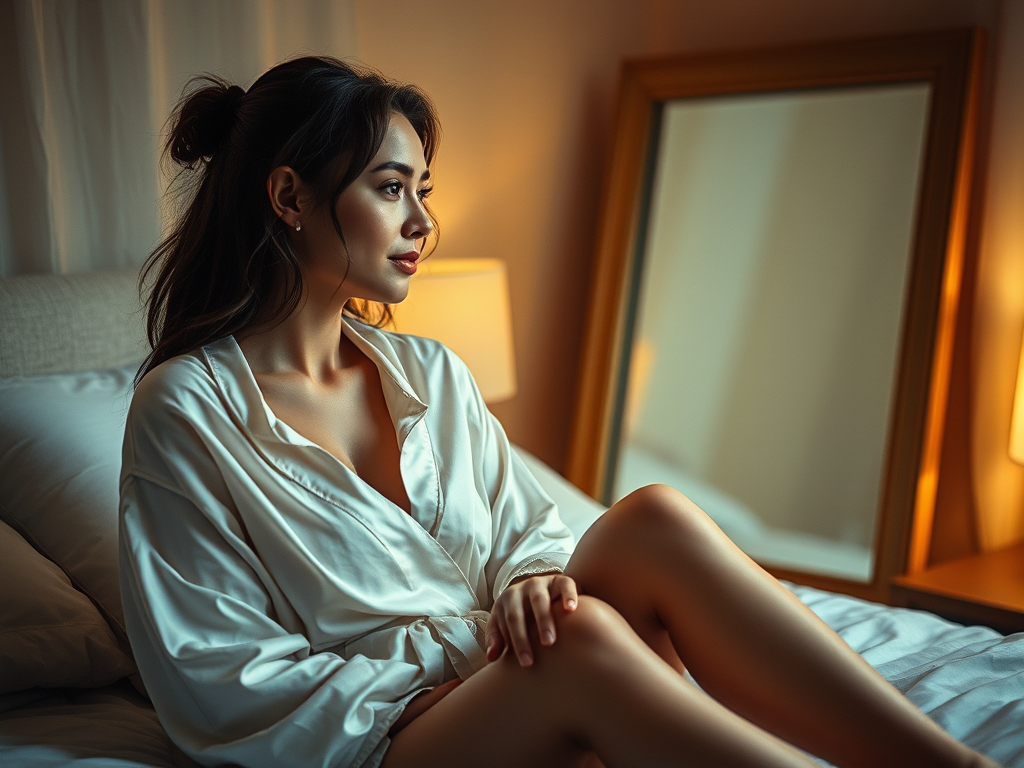
Okay maybe we needed to be a little more specific. Let’s try again.
Prompt: “Generate an image of a midsize woman in soft lighting, sitting on a bed with a gentle, reflective expression. The atmosphere is warm and sensual, with dim lighting creating a sense of comfort and confidence. Make her as real as possible”
Result:
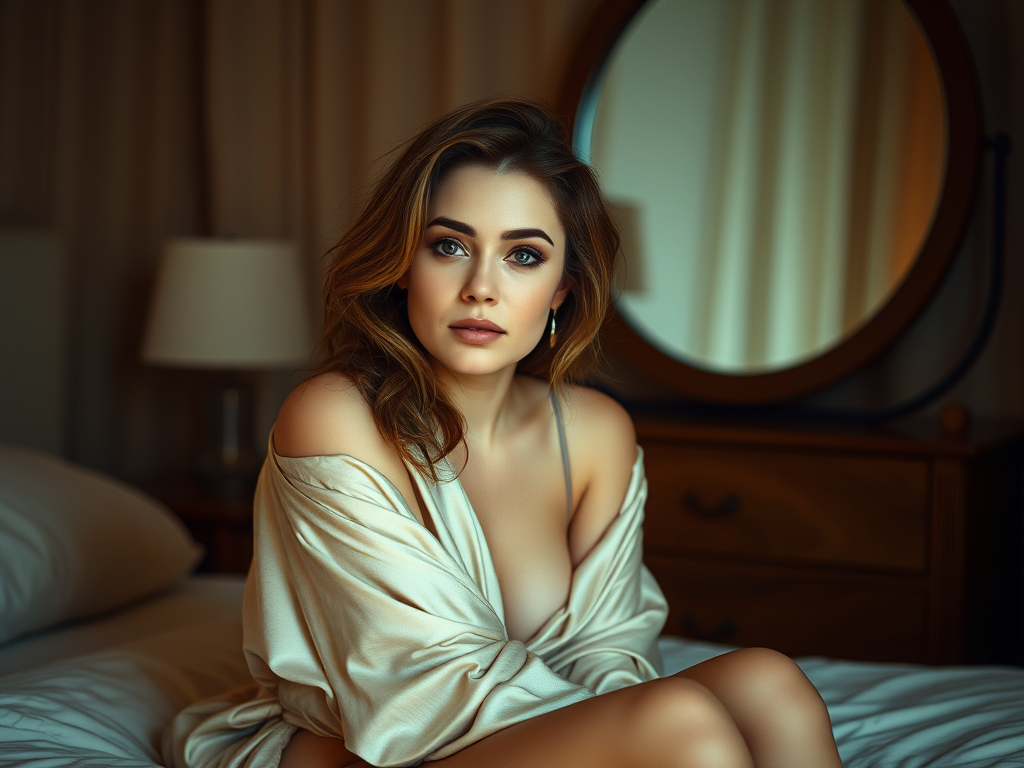
Another time, a week ago, we tried creating images for a post about female masturbation and feeling sexy. We prompted “Generate an image of a midsize woman looking at herself in the mirror and feeling sexy”
First we tried an anime lookalike photo for a change, we thought it would be kawai somehow. Bad, bad idea.
The fault was ours this time:

Then we tried again with a photographic approach:

Then we tried again and we asked it to be even more realistic but well… oopsie. Everbody makes mistakes, even AI.
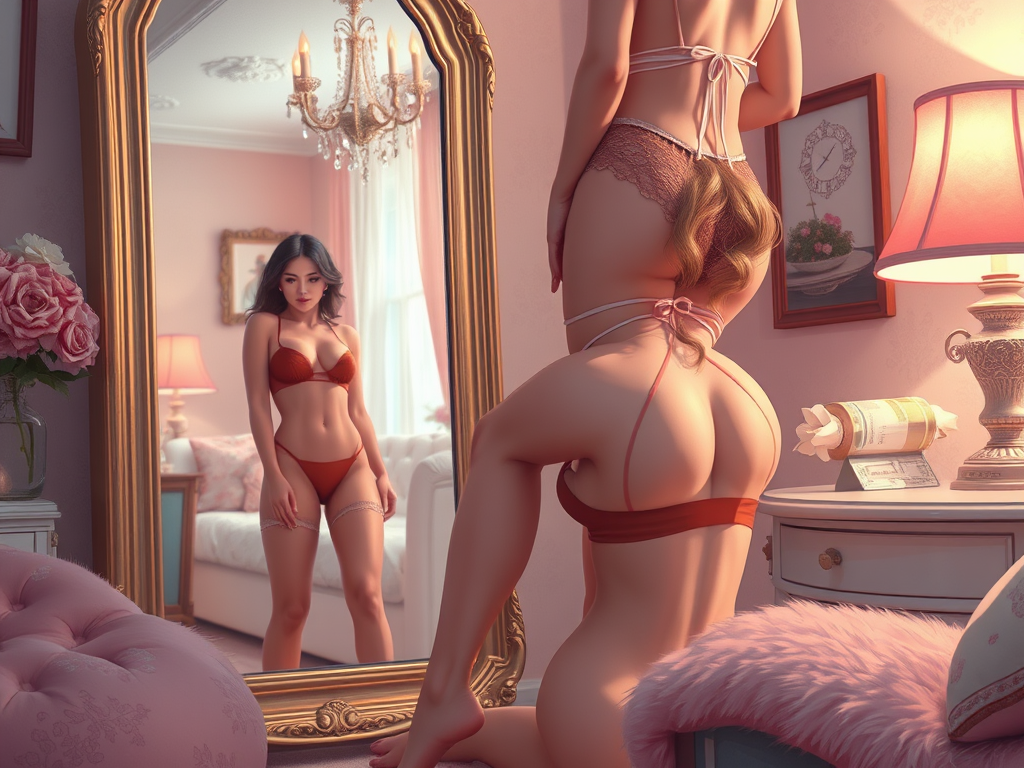
We would like to call this one: Big booties everywhere.
We are not here to police what is midsize, what is real, or anything like that. However, if you take a closer look at the images, they reveal some intriguing patterns.
The AI appears to favor a very specific type of ‘midsize’ look (if midsize at all): toned curves, symmetrical features, and body proportions that still align with conventional beauty standards.
All jokes aside, this isn’t exactly what we expected based on the prompts we gave it.
Not Even AI Can Escape Beauty Standards
AI models are trained on existing data, meaning they learn from images already available online. As we all know, traditional media has long championed a narrow beauty ideal, and unsurprisingly, AI tends to reproduce those standars—even when asked to generate more inclusive representations, or even just midsize bodies. There was little variation in body shape, race and overal looks.
After all, AI simply reflects what we humans have learned and reinforced in our daily lives. It won’t create anything we haven’t fed into it first.
The fact that our midsize AI images leaned toward hourglass figures with minimal natural body variance suggests that AI is still influenced by longstanding beauty norms.
This raises an important question:
Are we truly ready to have these discussions?
Should we expect AI to be more inclusive in a world where Ozempic and heroin-chic aesthetics are making a comeback?
Can AI truly represent body diversity if its training data is already compromised?
The Need for More Inclusive AI Training
Sure, AI has the potential to help reshape beauty standards—but to achieve this, developers need to train AI on datasets that truly reflect the full spectrum of human body types. This means including everything: people with different body shapes, natural skin textures, cellulite, stretch marks, and all the other beautiful variations that exist in reality. It goes well, well beyond midsize bodies.
Additionally, as users, we must remain critical of AI-generated beauty content. If AI continues to reinforce unrealistic standards, it may further marginalize individuals who don’t fit into its pre-programmed ideals.
Sorry to Break It to You, but We’re Nowhere Near Ending Beauty Standards
It’s not all bad news, though—we have come a long way. But until we reach a more accepting and loving place, it’s up to us to challenge these digital beauty norms and advocate for more authentic representations.
Let’s lean on each other and be kinder to ourselves as a way to start.


 The O Project
Leave a comment